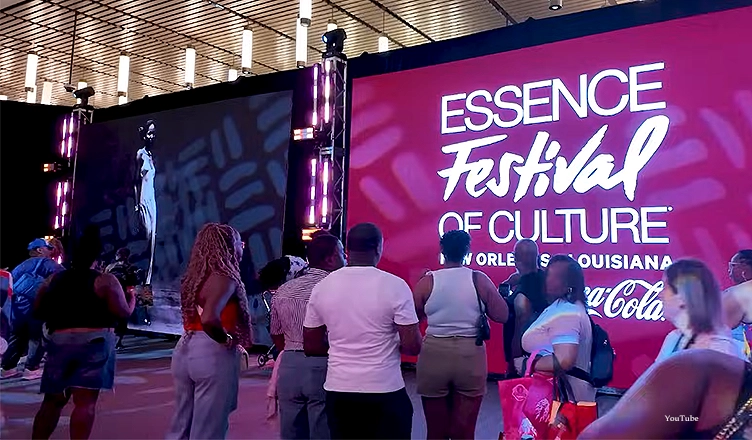
First, the 2025 Essence Festival of Culture faced falling attendance. Then came criticism from artists about technical problems, last-minute bookings, and event delays.
Now, the annual celebration of Black culture is under fire for “past due” payments to New Orleans vendors, seven months after last year’s festival took place from July 4-6.
A new analysis of public records by New Orleans news outlet Nola.com showed the festival owed the Ernest N. Morial Convention Center $456,000 as of Feb. 10.
Sundial Media Group, the New York-based owner of Essence Brands, has since made a $50,000 payment. But it still owes the convention center — where panels and performances took place — a total of $406,000.
A source said Sundial also owes a local production company more than $1 million. The company pushed back, saying the $1 million figure is too high, but declined to say how much it owes the production outfit.
Because the festival receives public funds each year, politicians are demanding answers. Among those expressing alarm about the situation is Rep. Jack McFarland (R-Louisiana), who currently serves as chairman of the U.S. House Appropriations Committee.
“Any event that doesn’t pay its bills after we give it funding, that’s a problem,” McFarland told Nola.com. “I don’t care which event it is. That doesn’t matter.”
Festival organizers issued a statement pushing back on the criticism.
“We value our relationships with the City, the State, the Convention Center, and our vendor community, and we continue to meet our obligations as we settle 2025 and are deep in planning for the 2026 festival with all of our core vendors returning for 2026,” Essence said in a statement.
Richelieu Dennis, a haircare mogul from the African nation of Liberia, purchased Essence Brands from Time Warner in 2018, returning Essence magazine and Essence Fest to Black ownership.
As we reported in July, Dennis said the festival brings thousands of visitors to New Orleans each year, and pumps millions of dollars into the local economy.
According to Dennis, 2025 was an anomaly. He noted that there were fewer corporate sponsors because of DEI rollbacks after President Trump returned to the White House.
He also criticized the state of Louisiana and the city of New Orleans, saying they were not offering enough financial incentives.
“We need the city and the state funding to keep pace with the increase in costs,” he said.
Regardless, the overdue bills are yet another black eye for the festival, which was once cited as an example of “Black Excellence.”
Last summer, Grammy winner Lauryn Hill performed in a near-empty stadium because the festival was running so far behind schedule that attendees grew tired of waiting and left. The festival admitted it was to blame, not Hill.
Legendary R&B singer Stephanie Mills posted an open letter to organizers on social media about “disorganization,” and said her performance was “marred” by “technical difficulties.”
Deon Guillory, a journalist in Baton Rouge, Louisiana, who attends the festival each year, said he noticed the 2025 festival was less organized.
“It wasn’t until about May when they announced some of the performances, but you didn’t find out until a month later which night they performed. This information used to be released in February,” Guillory told Urban Hollywood 411 in July.
Still, he said he’s hopeful the festival will get its act together for 2026.
“I do have faith festival organizers will turn things around,” he said.
Discover more from Urban Hollywood 411
Subscribe to get the latest posts sent to your email.