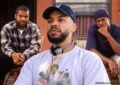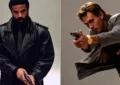
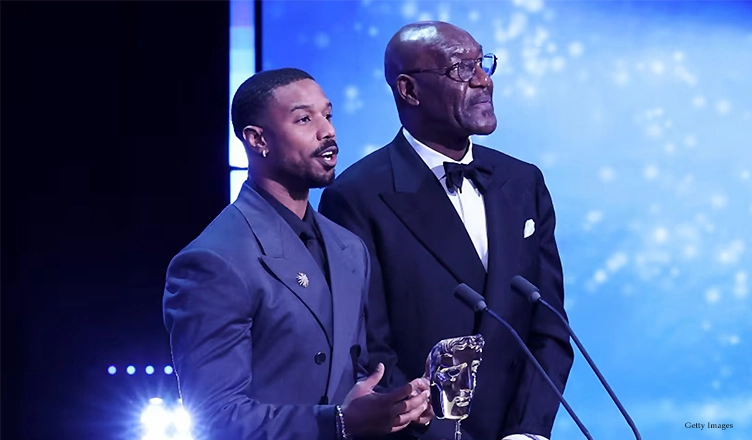
The British Academy of Film and Television Arts (BAFTA) issued an apology on Monday about “harm” and “inclusion” amid widespread public outcry. The apology came after a man in the audience shouted the N-word at Michael B. Jordan and Delroy Lindo.
The two Sinners stars were presenting the best visual effects trophy on Sunday, Feb. 22, when John Davidson, a Scottish Tourette’s activist, shouted “n—er” and “b–h” from the audience.
BBC censors, or whatever tape delay system they have in place, failed to catch the slur and it was broadcast on international television.
After facing criticism from members of the Hollywood community, BAFTA issued a lengthy apology, saying the “offensive language” was the result of Davidson having Tourette syndrome, a neurological disorder that can cause sudden verbal tics.
“At the BAFTA Film Awards last night, our guests heard very offensive language that carries incomparable trauma and pain for so many. We want to acknowledge the harm this has caused, address what happened and apologise to all,” the statement read.
Davidson was the subject of the BAFTA-winning film I Swear. Moments after his outburst, host Alan Cumming apologized and said the slur was a verbal tic caused by Davidson’s illness.
The outburst overshadowed Sinners picking up three awards at the ceremony, and prompted many in the Hollywood community to speak out.
Oscar winner Jamie Foxx commented under a social media post and called the slur “unacceptable.” He added about Davidson, “Nah he meant that shit.”
“The Breakfast Club” co-host Charlamagne tha God branded the BAFTAs, Cumming and Davidson “Donkey of the Day” — a moniker the radio show uses to call out questionable behavior.
“Now, the reason I’m giving the BAFTA Film Awards, the host Allan Cumming, and all the handlers of John Davidson ‘donkey’ is because the reality is he shouldn’t have been in the room,” Charlamagne said. “If a person has a condition that makes him scream out inappropriate, obscene, or taboo words. Why risk having him in the room? There are people that networks wouldn’t think about putting on TV, especially live TV, because they have no idea what they might say — example, Kanye West.”
Davidson, BAFTA, and the BBC faced additional scrutiny when Hannah Beachler, the Oscar-winning production designer for Sinners, said the Tourette’s activist yelled the N-word at her and another Black woman who attended the ceremony.
“The situation is almost impossible, but it happened 3 times that night, and one of the three times was directed at myself on the way to dinner after the show,” Beachler said in a statement she wrote on X.
The BBC issued an apology earlier Monday.
“Some viewers may have heard strong and offensive language during the Bafta Film Awards 2026. This arose from involuntary verbal tics associated with Tourette’s syndrome, and was not intentional. We apologise for any offence caused by the language heard,” a spokesperson for the network said in a statement published on the BBC website.
The outbursts were a another blemish for the BAFTAs, which have come under fire in the past for overlooking artists of color.
In 2023, the awards faced scrutiny after all of the winners were white — snubbing several Black nominees. The oversight touched off renewed calls for change, as previously reported.
You can read the full statement from BAFTA about Sunday’s incident below:
“At the BAFTA Film Awards last night, our guests heard very offensive language that carries incomparable trauma and pain for so many. We want to acknowledge the harm this has caused, address what happened and apologise to all.
One of our guests, John Davidson MBE, has Tourette Syndrome and has devoted his life to educating and campaigning for better understanding of this condition. Tourette Syndrome causes involuntary verbal tics, that the individual has no control over. Such tics are in no way a reflection of an individual’s beliefs and are not intentional. John Davidson is an executive producer of the BAFTA nominated film, I Swear, which is based on his life experience.
We take the duty of care to all our guests very seriously and start from a position of inclusion. We took measures to make those in attendance aware of the tics, announcing to the audience before the ceremony began, and throughout, that John was in the room and that they may hear strong language, involuntary noises or movements during the ceremony.”
Discover more from Urban Hollywood 411
Subscribe to get the latest posts sent to your email.